LX Gas Spring Resource
How Gas Springs Are Made: Inside a Gas Spring Factory
How a gas spring is made, step by step: tubes, rods, seals, automated assembly, nitrogen charging, coating, testing and export packing in an OEM factory.
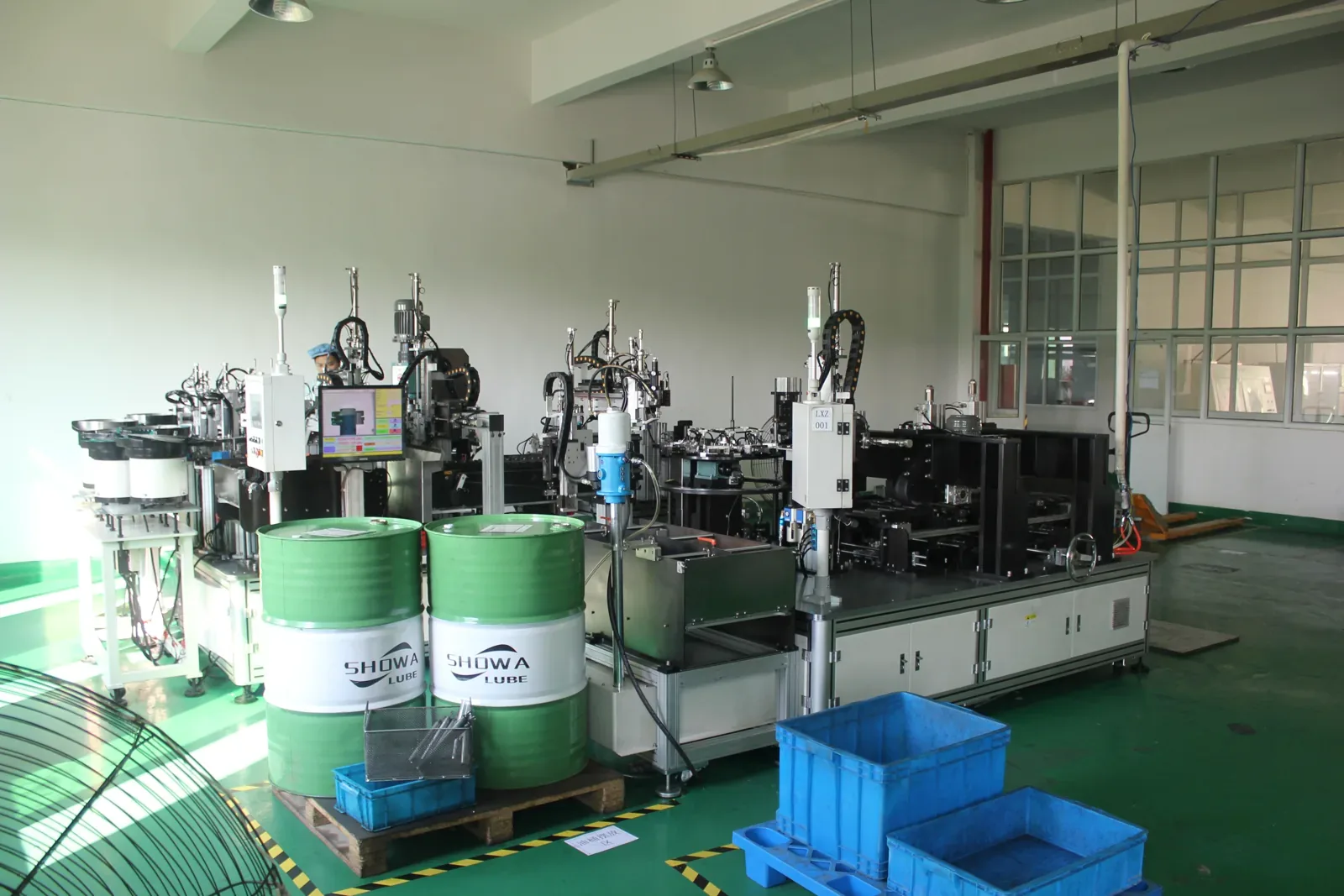
A gas spring looks simple from the outside: a tube, a rod, and two end fittings. Inside, it is a sealed pressure vessel with a piston, a valve, precision seals, oil, and nitrogen charged to a specific force. This guide follows a gas spring through the factory of LX Gas Spring (Changzhou Longxiang Gas Spring Co., Ltd.), a manufacturer with 262 employees and a 27,000 m² plant that produces more than 3,000,000 gas springs a year for customers in 70+ countries.
Short answer: a gas spring is made by machining and finishing the pressure tube and piston rod, assembling the piston, seals, and guide into the tube, filling it with a measured amount of oil and nitrogen to set the force, sealing it, coating the tube, fitting the end fittings, and testing force and function before packing.
What Is Inside a Gas Spring
- Pressure tube: a welded or seamless steel tube (or SS304/SS316 stainless steel) that holds the gas.
- Piston rod: a ground steel rod, QPQ treated or chrome plated, that slides through the seal.
- Piston and valve: the piston carries a small orifice or valve that controls how fast oil and gas pass, which sets the extension speed and damping.
- Seal and guide package: double seals keep the nitrogen and oil inside while the rod moves; the guide keeps the rod centred.
- Oil: lubricates the seal and gives end-of-stroke damping.
- Nitrogen: the charge pressure sets the extension force.
- End fittings: ball sockets, eyelets, clevis forks, blade ends, or threaded studs that connect the spring to the application.
Step 1: Component Processing
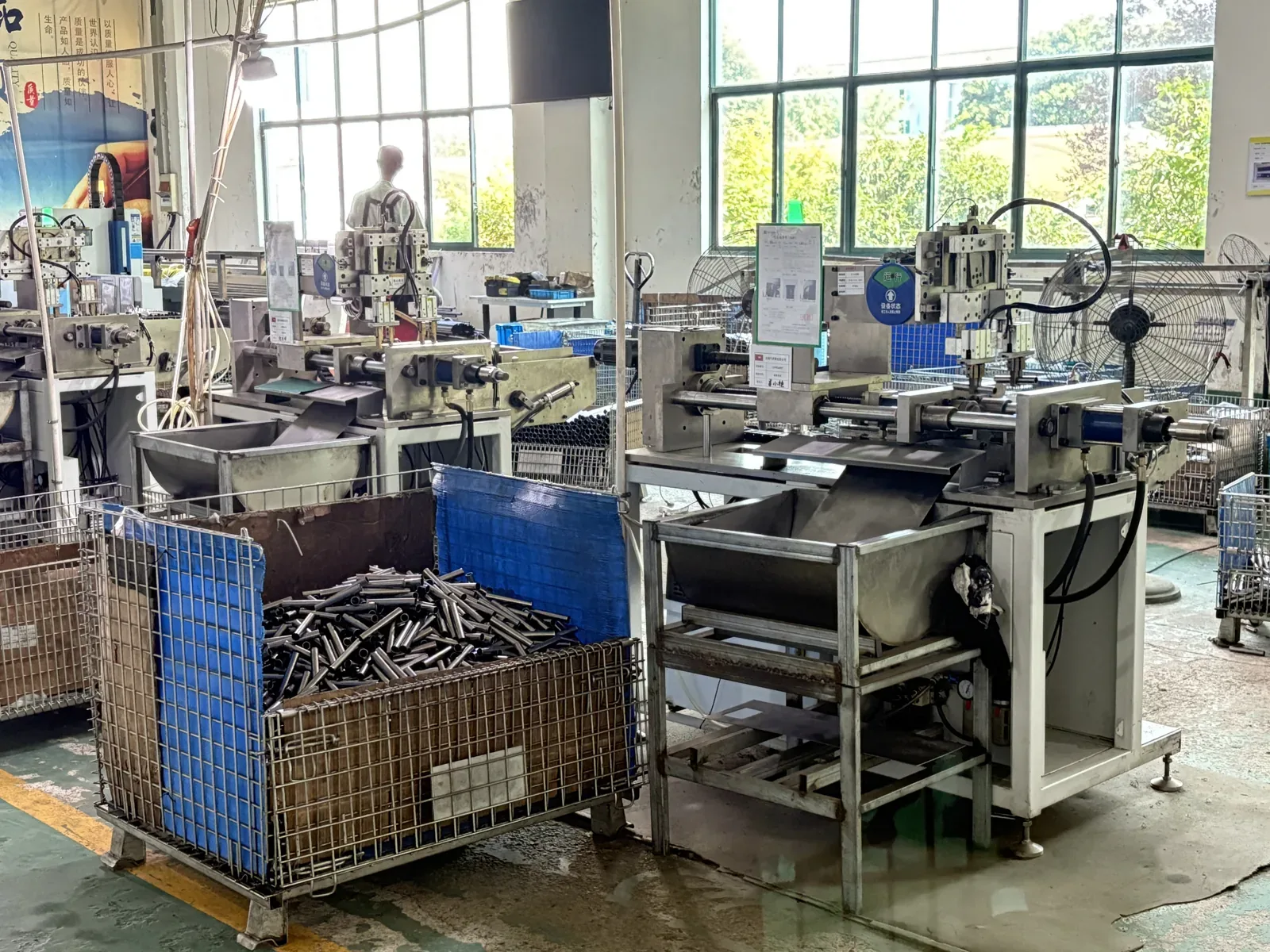
Tubes are cut to length and formed at the closed end; rods are cut, ground, and given a hard, corrosion-resistant surface. Pistons, guides, and fittings are machined and inspected before they reach assembly, because a small burr or surface mark on a rod can damage the seal and cause a leak later.
Step 2: Automated Assembly
Small parts such as seals, guides, and pistons are fed by vibratory bowl feeders into automated assembly cells. Automation keeps the seal position and orientation consistent from one part to the next, which matters for leak-free performance over hundreds of thousands of cycles.
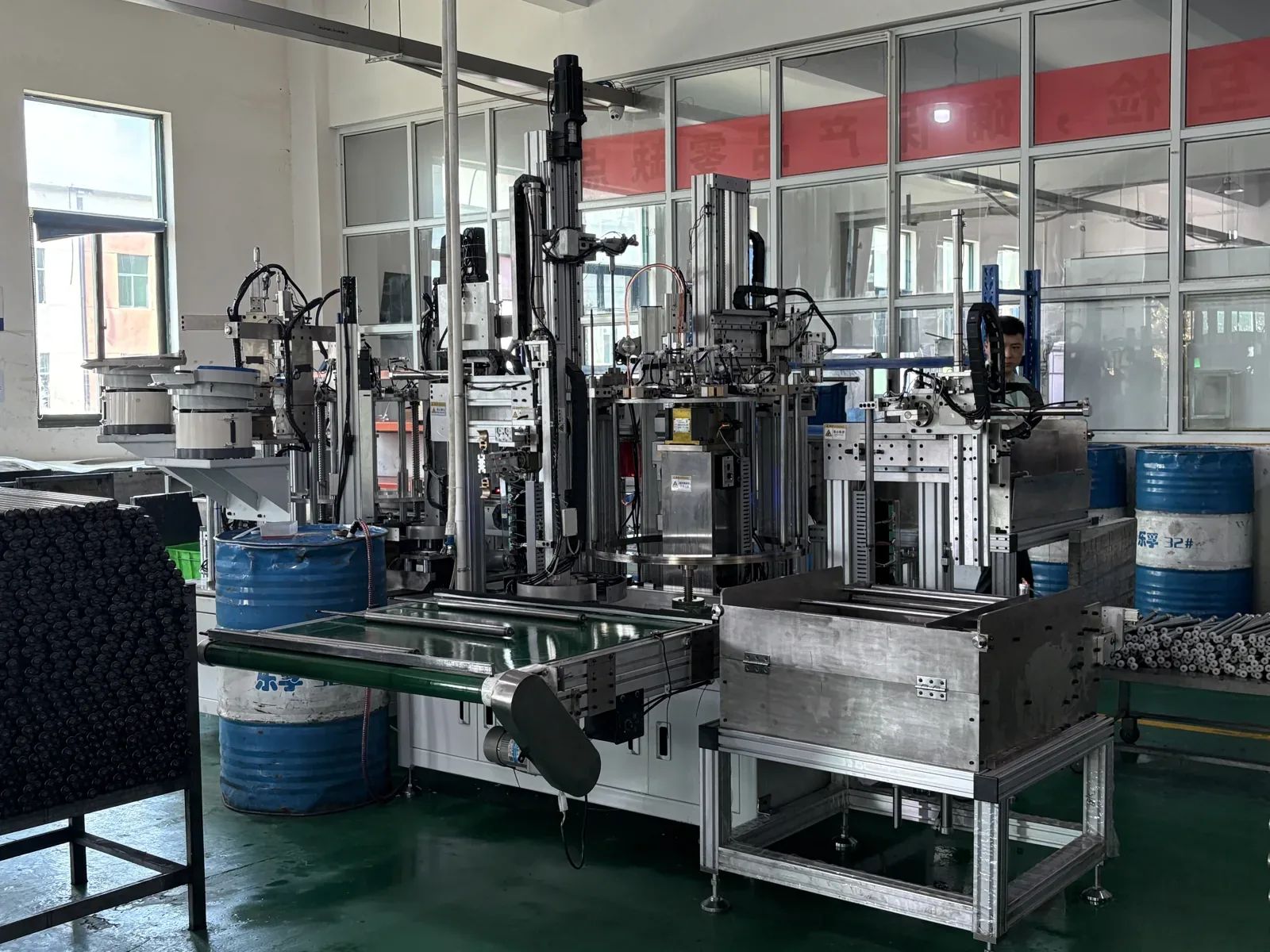
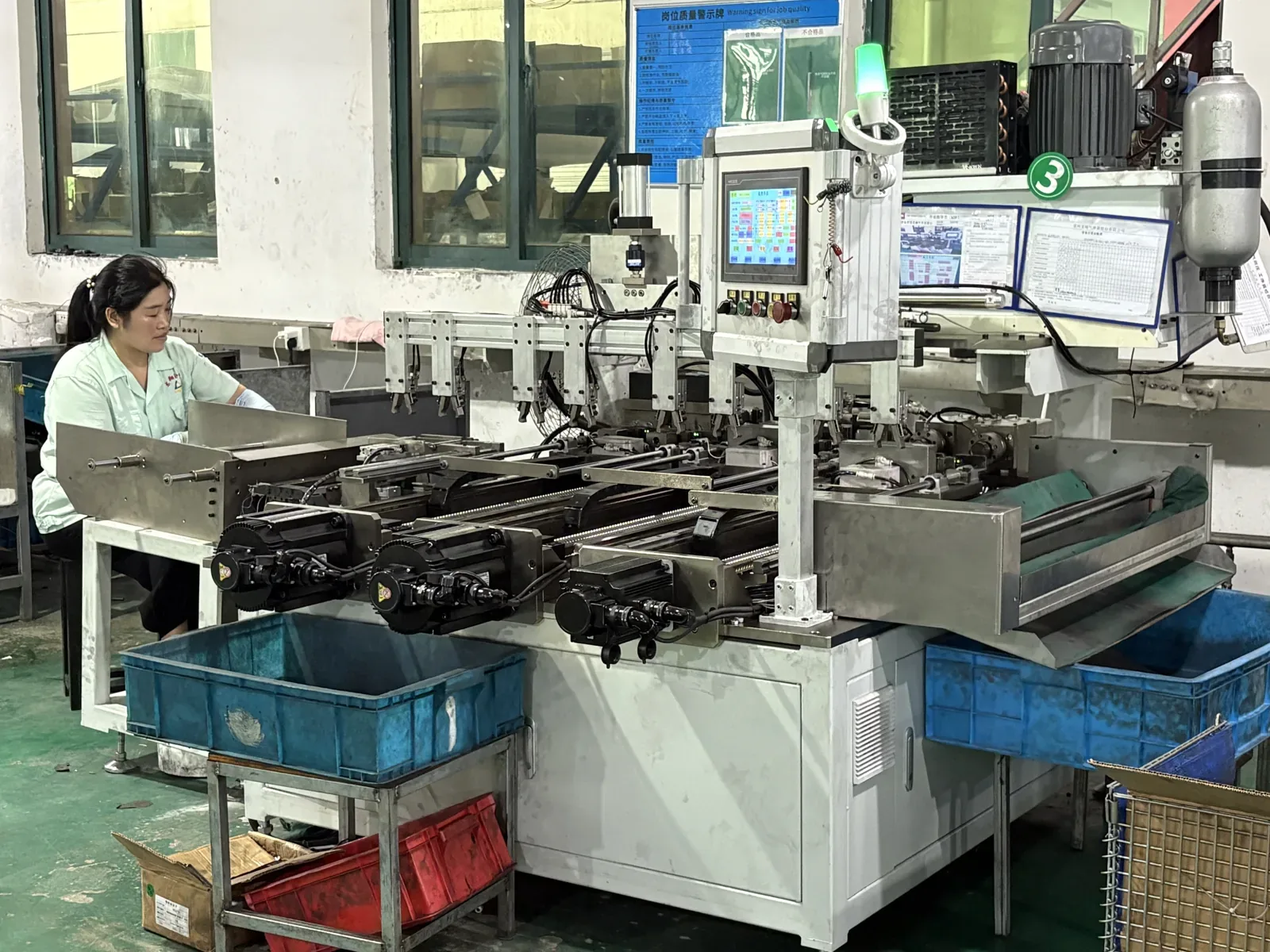
Operators run and monitor each station, checking process data on screen rather than relying only on end-of-line checks.
Step 3: Oil Filling and Nitrogen Charging
After the rod, piston, and seal package are assembled, a measured volume of oil is added and the spring is charged with nitrogen. The charge pressure determines the extension force, which is why one tube size can cover a wide force range. LX gas springs are made from about 10 N to 2,500 N, with strokes from 20 mm to 1,000 mm and rod/tube sizes from 6/15 mm to 14/28 mm.
Step 4: Coating
Steel tubes are coated to protect them from corrosion and to give the required color. Tubes travel through the coating line on an overhead conveyor, then cure and cool on racks.
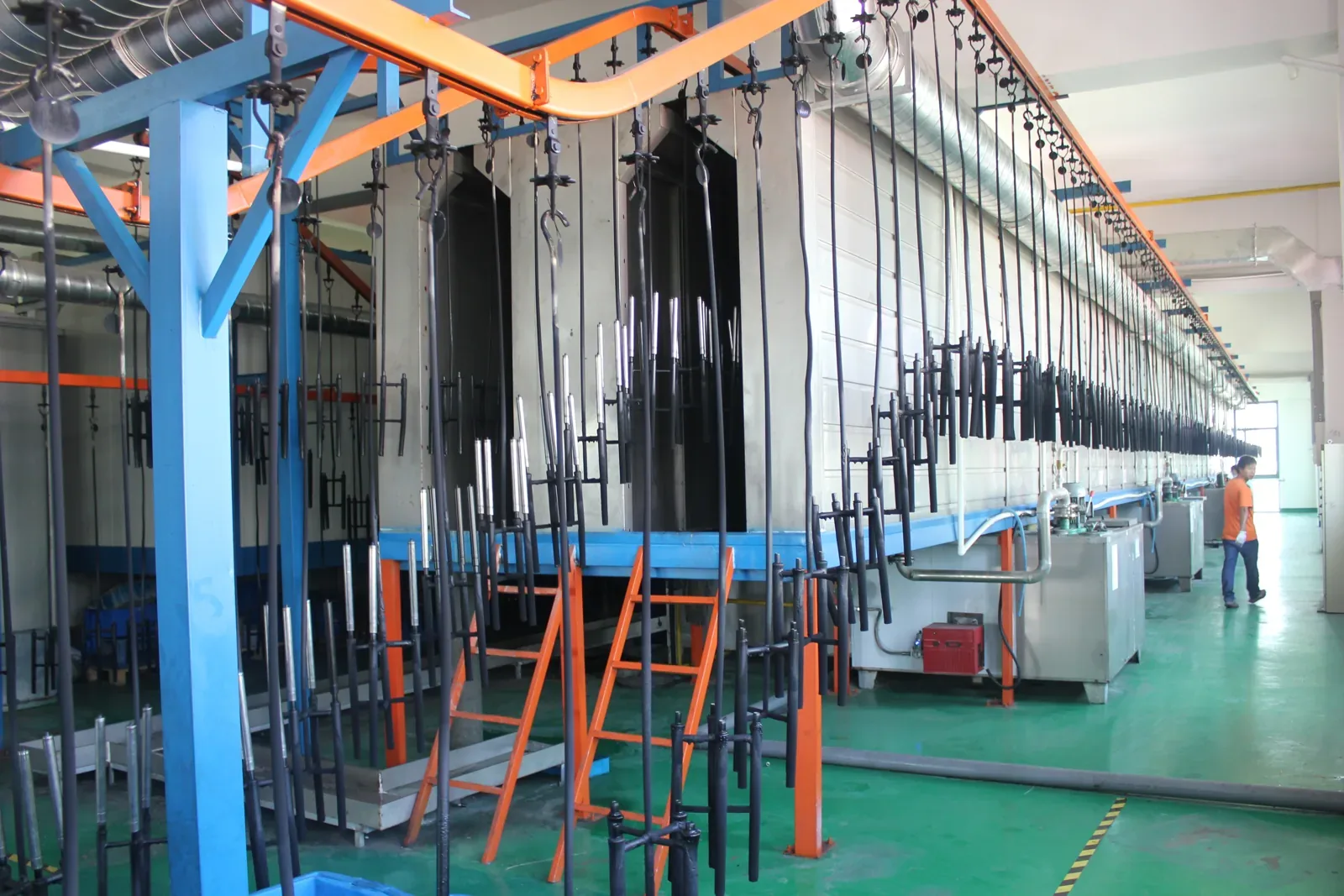
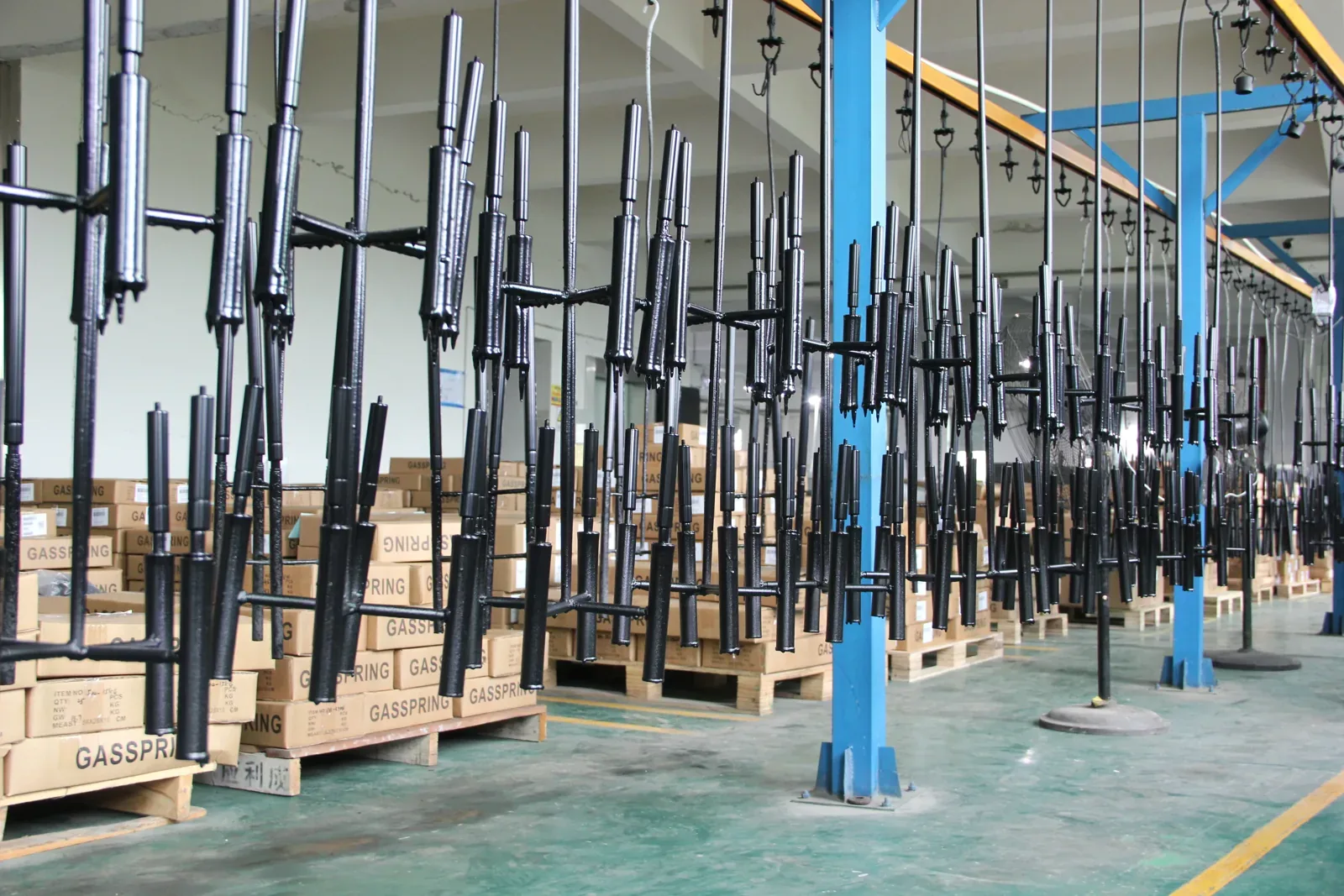
Stainless steel gas springs for marine, food, or washdown use are not painted; the SS304 or SS316 tube itself provides the corrosion resistance.
Step 5: End Fittings and Final Inspection
End fittings are pressed or screwed onto the rod and tube ends to match the customer drawing. Finished springs are inspected for force, length, and smooth movement according to the inspection plan before they are labeled.
Step 6: Laboratory Testing
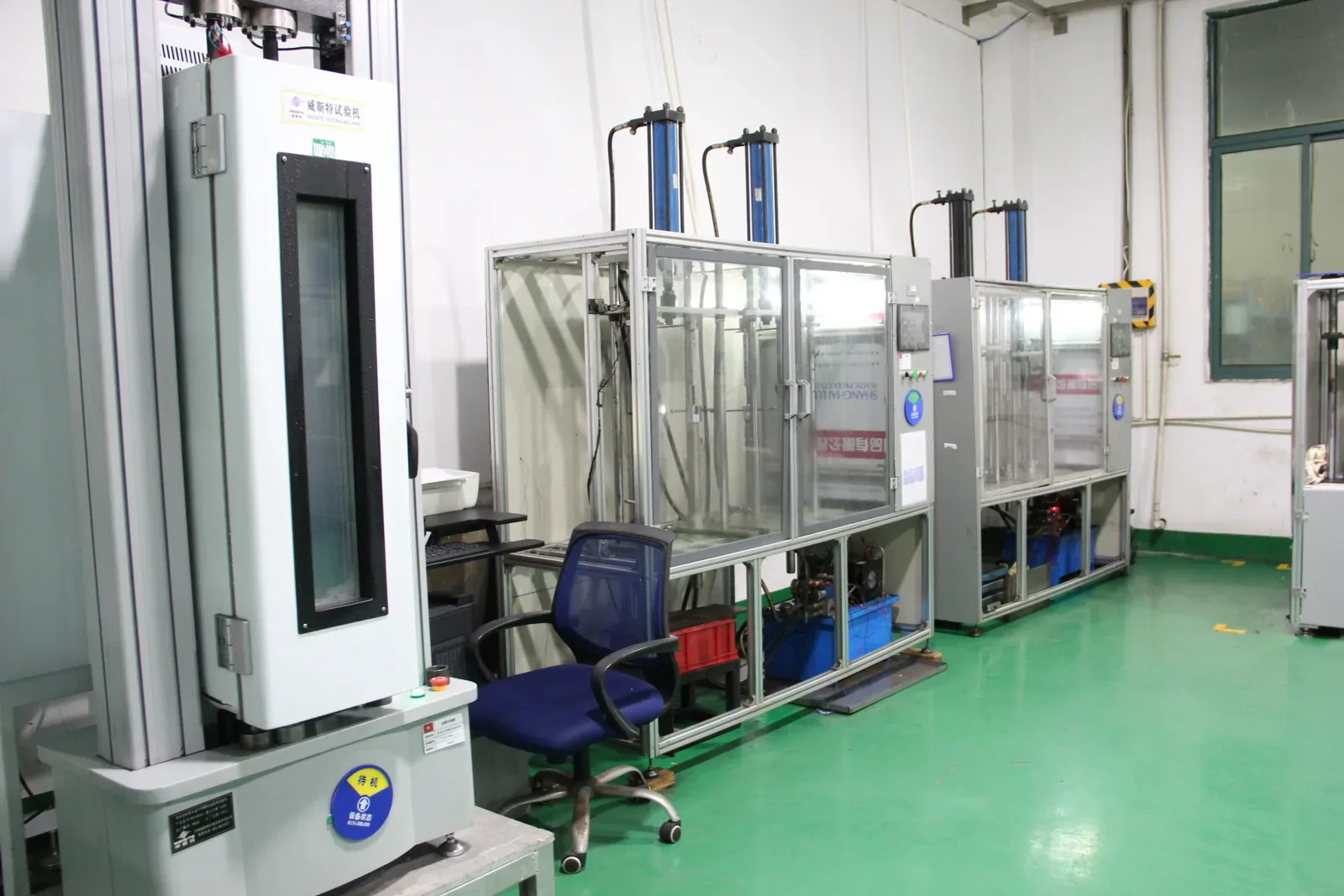
Beyond in-line checks, samples go to the factory laboratory for force measurement, endurance cycling, and salt-spray corrosion tests. LX gas springs have passed a TÜV fatigue test of 180,000 cycles, materials are SGS RoHS tested, and production runs under an ISO 9001 quality management system.
Step 7: Packing and Export
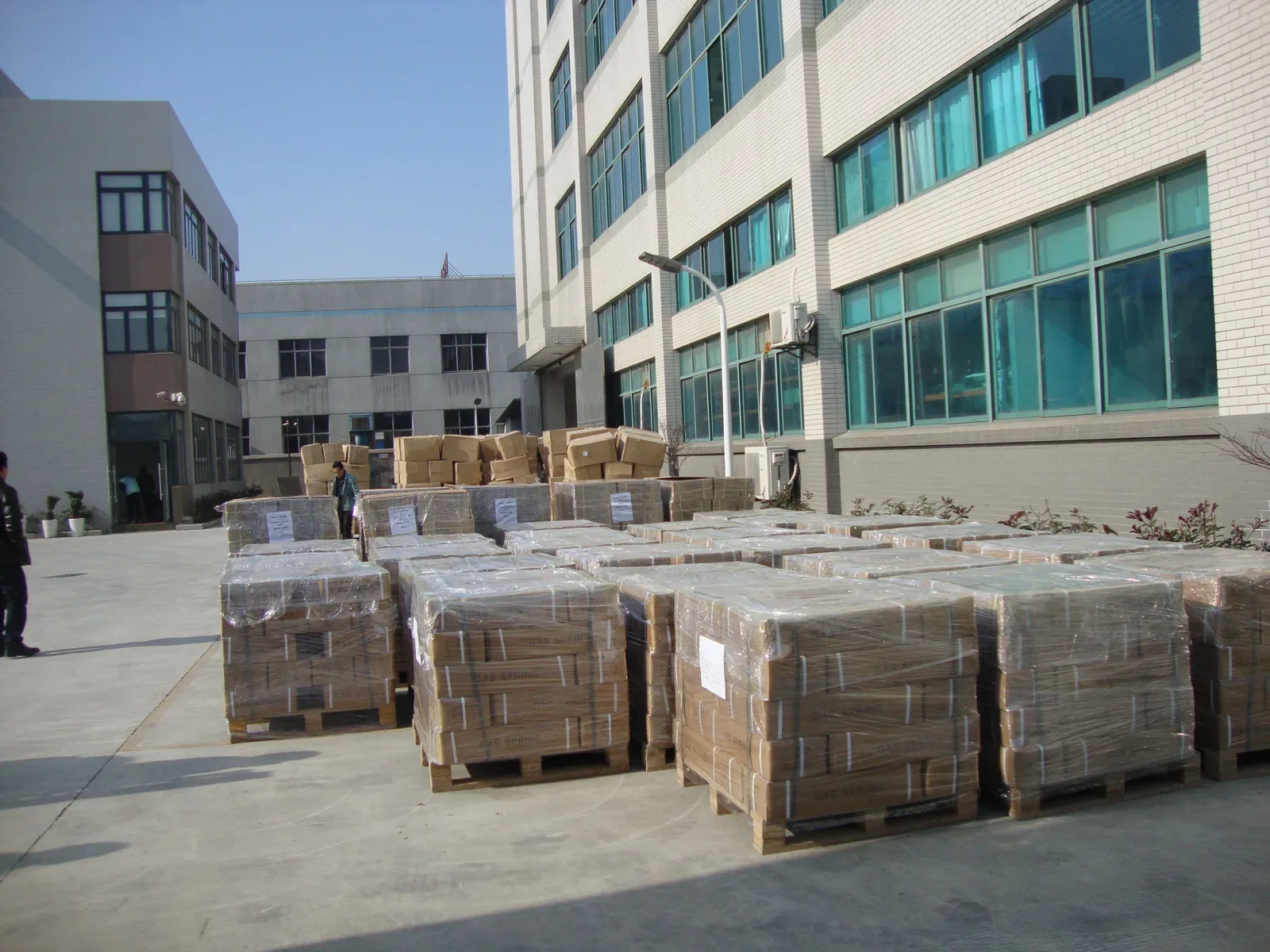
Finished gas springs are packed in export cartons, palletized, and wrapped for shipment. Typical production lead time is up to 15 working days after the specification is confirmed, and orders ship FOB, CIF, or CFR from Shanghai. See how gas springs are packed and shipped for details.
What This Means for Buyers
- Ask how the rod surface is finished and how many seals are used; these decide leak resistance.
- Ask what is tested in-line and what is tested in the lab, and request test data for your part.
- Check the warranty: all LX gas springs carry a 3-year warranty.
- Read about how long gas springs last, compare lift gas springs, or use the OEM manufacturer guide to compare suppliers. You can also see the factory.
Frequently Asked Questions
What gas is inside a gas spring?
Nitrogen. It is inert, does not burn, and does not react with the oil or seals.
Why is there oil in a gas spring?
The oil lubricates the seal and provides damping at the end of the stroke, so the lid does not slam open.
How is the force of a gas spring set?
By the nitrogen charge pressure acting on the cross-section of the piston rod. Higher pressure or a thicker rod gives more force.
Can a gas spring be refilled?
No. Production gas springs are sealed permanently and should be replaced, not refilled or opened.
How long does it take to make an order of gas springs?
Typical production lead time at LX Gas Spring is up to 15 working days after the specification is confirmed.