Corrosion Resistant Stainless Steel Gas Springs
Stainless Steel Options For Corrosion Exposure
SS316 stainless steel gas springs may improve corrosion resistance in marine, washdown, medical, food-equipment, chemical, humid, and outdoor environments. Material selection does not make an assembly corrosion-proof; the actual exposure, cleaning process, drainage, and maintenance conditions still need review.
Review The Complete Hardware System
The rod, tube, fittings, ball studs, brackets, fasteners, nearby metals, and drainage path should be considered together. A stainless gas spring paired with unsuitable mounting hardware can still experience early corrosion or restricted movement.
Exposure And Cleaning Details
For marine and washdown projects, describe salt contact, cleaning agents, standing water, condensation, temperature, cleaning frequency, and contact with dissimilar metals. These conditions help determine whether SS316 and matching stainless hardware should be reviewed for the project.
Testing And Documentation
Salt-fog testing, material records, RoHS information, surface requirements, or customer-specific documentation should be discussed before quotation and confirmed for the selected part. Availability and scope can vary by product and project.
Information To Include In An RFQ
Send the application, force, stroke, extended and compressed length, fitting type, bracket and fastener materials, exposure conditions, cleaning agents, operating temperature, quantity, drawings, photos, and documentation needs. Final suitability should be confirmed through project review and sample testing.
What Makes Stainless Steel Gas Springs Corrosion Resistant
Stainless steel gas springs resist corrosion because the tube, piston rod and end fittings are made of stainless steel instead of painted or plated carbon steel, so there is no coating to chip and rust under it, and the sealed unit keeps water and dirt away from the gas and oil inside. LX Gas Spring runs salt spray tests in-house to compare materials and finishes; test duration and acceptance criteria are agreed per project. Choose SS304 for indoor, humid or wash areas without chlorides, and SS316, which contains molybdenum, for saltwater, salt spray, brine and chlorinated cleaning agents.
SS304 vs SS316 Stainless Steel Gas Springs
Both grades are austenitic stainless steels. SS316 adds roughly 2% molybdenum, which improves resistance to chlorides such as seawater, salt spray, de-icing salt, and chlorinated cleaning agents. SS304 is often sufficient for indoor, humid, or food-handling areas without chloride exposure. LX Gas Spring builds stainless gas springs in SS316 and 316L, with about 20 to 2,000 N of force, 75 to 450 mm of stroke and an operating range of -30 to +100 °C, and can review SS304 for projects where chloride exposure is low.
Marine, Food, Pharmaceutical, And Chemical Applications
The SS316 range includes marine gas struts for boat hatches, yacht covers, and dock boxes; food-industry gas springs for washdown machinery; pharmaceutical equipment springs for cleanable enclosures; chemical-resistant springs for process equipment covers; heavy-duty stainless springs for larger panels; and SS316 lockable gas springs where a stainless unit must hold intermediate positions.
Stainless Steel Or Painted Carbon Steel?
Standard LX gas springs use a painted carbon steel tube, a QPQ-treated piston rod, and a double-seal system, which suits most indoor furniture, cabinet, vehicle, and machinery covers. Stainless steel is worth specifying when the spring sees saltwater, frequent washdown, disinfectants, or outdoor exposure where paint damage would lead to rust.
Salt Spray Testing In The LX Laboratory
The LX Gas Spring laboratory has its own salt spray chamber for comparing coatings and stainless parts, alongside force testers and multi-station endurance testers. LX gas springs have passed a TÜV fatigue test of 180,000 cycles, and all LX gas springs are covered by a 3-year warranty. Test duration and acceptance criteria for a stainless project are agreed with the buyer before samples are approved.
SS316 Stainless Steel Gas Springs and End Fittings
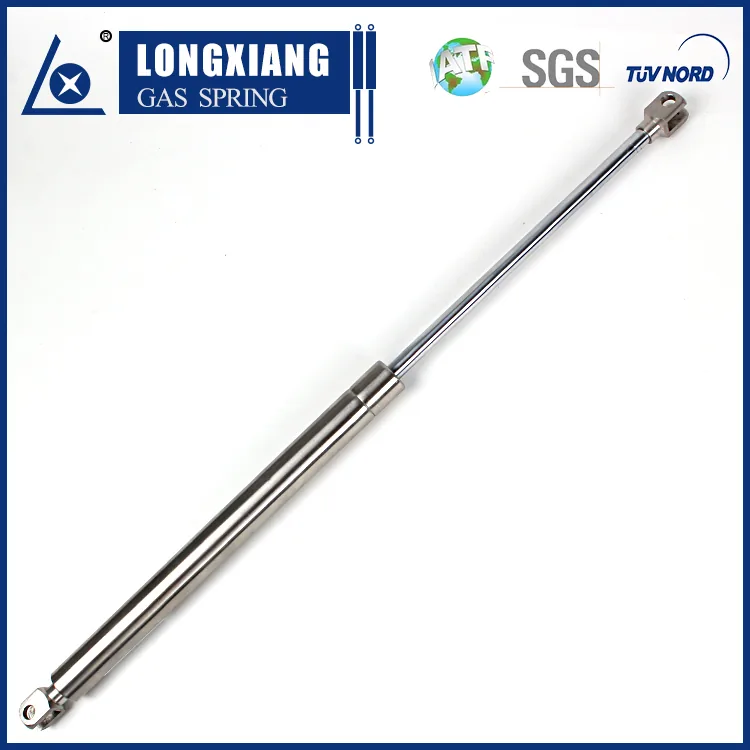
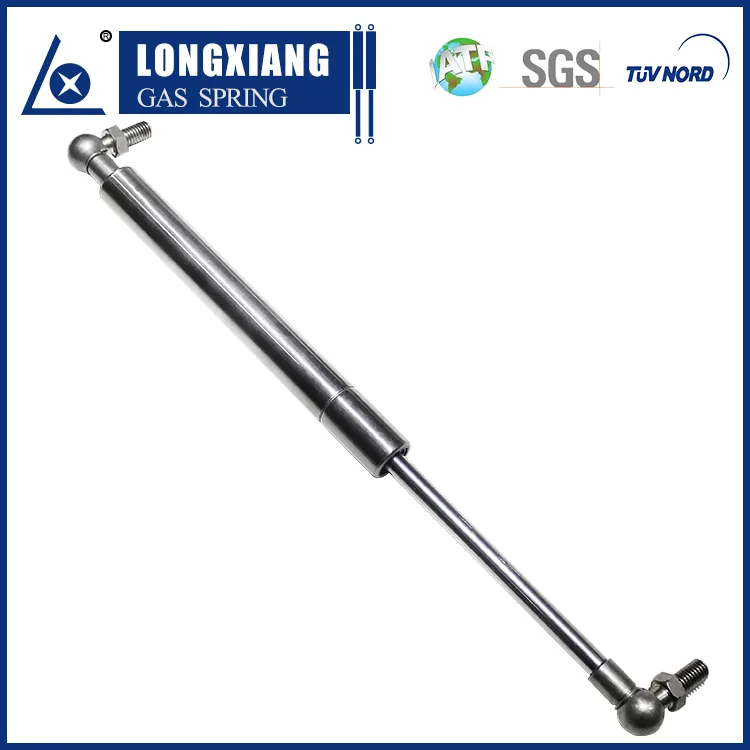
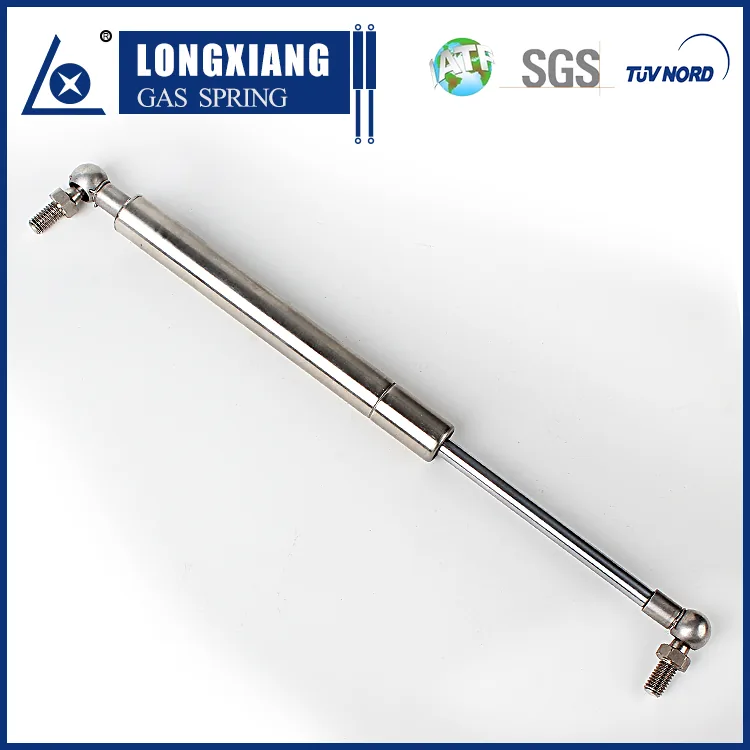
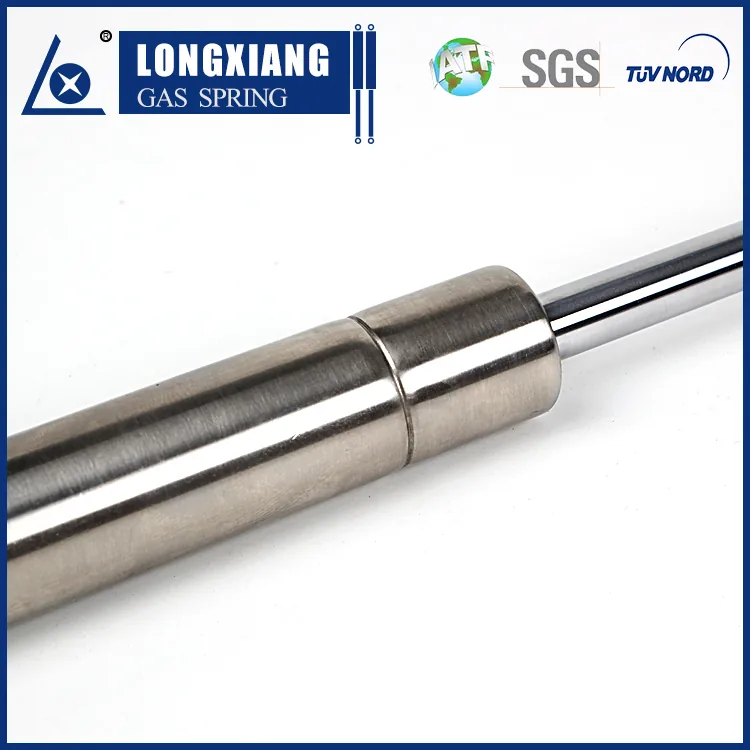
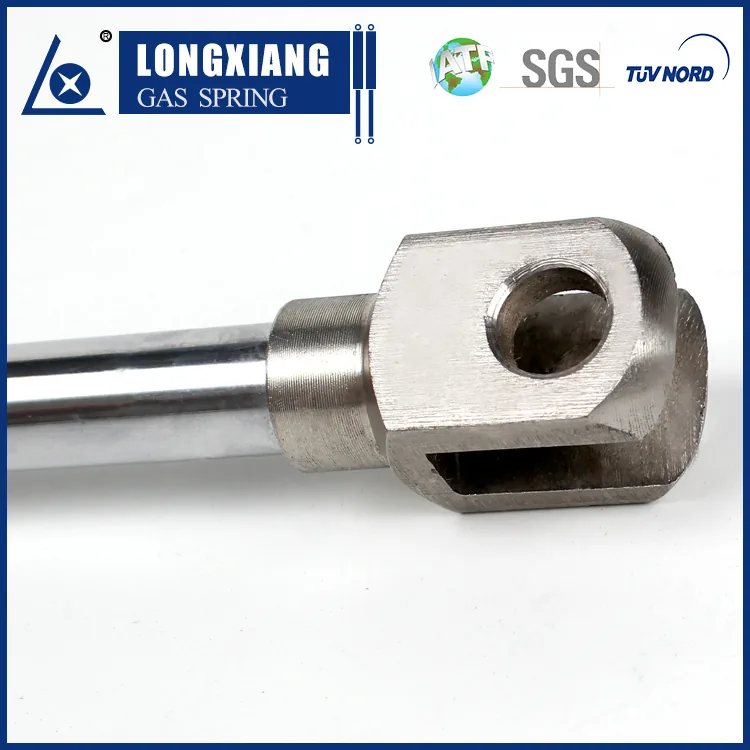
Choose Corrosion Resistant Gas Springs By Environment
| Environment | Typical exposure | Usual choice |
|---|---|---|
| Marine and saltwater: boat hatches, dock boxes, coastal equipment | Salt spray, seawater, standing water | SS316 gas spring with SS316 fittings, brackets and fasteners |
| Washdown and food machinery | High-pressure water, detergents, sanitizers | SS304 with water and mild detergents; SS316 with chlorinated or chloride-containing cleaners |
| Chemical processing | Chemical vapour or splashes | SS316, reviewed against the named chemicals |
| Outdoor and humid equipment | Rain, condensation, de-icing salt | SS304 inland; SS316 near the coast or with road salt |
| Indoor dry equipment | Little moisture | Standard painted steel is usually enough |
Frequently Asked Questions
What makes a gas spring corrosion resistant?
A stainless steel tube, piston rod and end fittings instead of painted or plated carbon steel, in SS304 or SS316 depending on the environment, with stainless brackets and fasteners so no part of the mounting rusts. LX Gas Spring compares materials and finishes with in-house salt spray testing.
What is the difference between SS304 and SS316 gas springs?
SS316 contains about 2% molybdenum, which gives better resistance to chlorides such as seawater, salt spray, and chlorinated cleaners. SS304 can be suitable indoors or in food areas without chloride exposure. For marine and washdown use, SS316 is the usual choice.
Are SS316 gas springs suitable for saltwater?
Yes. The molybdenum in SS316 gives much better resistance to chloride pitting than SS304 or painted steel, so SS316 is the usual grade for saltwater, salt spray, and coastal use. Complete boat hatch solutions are covered on the LX marine gas springs page.
When is SS316 stainless steel worth specifying?
SS316 should be reviewed for saltwater, washdown, chemical, medical, humid, outdoor, or corrosive environments where standard steel parts may not provide suitable service life.
Should brackets and fittings also be stainless steel?
Often yes. The gas spring, ball studs, sockets, brackets, fasteners, and nearby materials should be reviewed together so the full mounting system matches the corrosion exposure.
Is stainless steel always required for outdoor gas springs?
Not always. Outdoor use should be reviewed by humidity, salt, cleaning chemicals, standing water, temperature, and service life expectations. Some projects can use treated steel, while marine or washdown use often needs stainless hardware.
Are stainless steel gas springs suitable for washdown equipment?
Yes, SS316 gas springs are used on food and pharmaceutical machinery that is cleaned frequently. Share the cleaning agents, concentration, temperature, and frequency so seals and fittings can be reviewed together with the stainless body.
Can LX Gas Spring provide SS316 gas springs with custom dimensions?
Force, stroke, extended length, compressed length, end fittings, brackets, and quantity can be reviewed for OEM production. Material availability and the surrounding hardware should be confirmed for the selected configuration.
What should I send for a marine or washdown gas spring quote?
Send hatch or panel weight, mounting geometry, open angle, stroke, length, fitting type, salt or chemical exposure, cleaning process, bracket material, quantity, and any certificate or test requirements.