LX Gas Spring Resource
Stainless Steel Gas Springs for Washdown and Food Machinery
How to specify stainless steel gas springs for washdown and food machinery: cleaning agents, SS304 vs SS316, stainless fittings, hygienic mounting and testing.
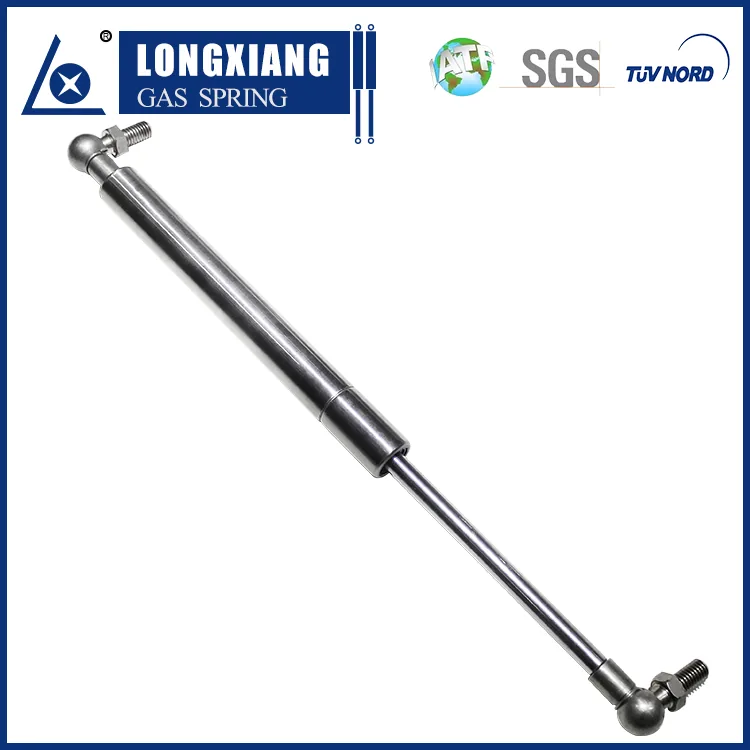
Washdown is hard on gas springs. Food machinery, packaging lines and processing equipment are cleaned with high-pressure water, hot water, detergents and sanitizers, sometimes every shift. A gas spring that lasts for years on a dry machine guard can corrode, lose its seal or start shedding paint in a washdown area. This guide explains what washdown does to a gas spring, when to choose SS304 or SS316, and how to design the mounting so it is easy to clean.
Short answer: for washdown and food machinery, specify stainless steel gas springs and stainless end fittings, brackets and fasteners. SS304 is often enough where water and mild detergents are used; choose SS316 where chloride-containing cleaners, salt or brine are present. Mount the spring out of the direct spray path, rod down where possible, and agree the cleaning agents and a test plan with the supplier before samples are approved.
What Washdown Does to a Gas Spring
- Coating damage: high-pressure jets and abrasive cleaning can chip paint or plating on carbon-steel tubes, and corrosion starts at the damage.
- Chemical attack: alkaline and acidic cleaners and chlorine-based sanitizers attack coatings and some metals; chlorides are the main cause of pitting on stainless steel.
- Water and dirt at the seal: a jet aimed at the rod seal can force water and debris past the wiper, and residue on the rod wears the seal on each stroke.
- Trapped moisture: crevices in fittings, bracket joints and threads hold water and cleaning residue, where corrosion and bacteria can build up.
- Mixed metals: a stainless spring bolted to plain steel brackets can still rust at the joint.
SS304 or SS316 for Washdown?
Both are austenitic stainless steels. SS316 contains molybdenum, which gives better resistance to pitting by chlorides than SS304.
| Condition | SS304 | SS316 |
|---|---|---|
| Water and mild detergents, indoors | Usually suitable | Suitable |
| Chlorinated or chloride-containing cleaners and sanitizers | Pitting risk | Preferred |
| Salt, brine or seafood processing | Not recommended | Preferred |
| Frequent high-pressure, hot washdown | Review with the cleaning plan | Preferred |
| Cost-sensitive dry areas near the wash zone | Often enough | Higher cost |
LX stainless steel gas springs are made in SS316 and 316L, with about 20 to 2,000 N of force, 75 to 450 mm of stroke and an operating range of -30 to +100 °C; other sizes are reviewed against your drawing. For a detailed comparison, see SS304 vs SS316 gas springs.
Make the Whole Assembly Stainless
The tube and rod are only part of it. Specify the end fittings, ball studs, sockets, brackets, nuts and washers in a matching stainless grade, and avoid plain steel or plated parts in the washdown zone. Where the spring meets a painted or aluminium frame, an isolating washer helps prevent galvanic corrosion.
Hygienic Mounting Design
- Few crevices: prefer simple eyelet or clevis fittings with smooth surfaces over complex assemblies with gaps that hold water.
- Drainage: mount brackets so water runs off, without pockets or upward-facing cups.
- Out of the spray path: put the spring on the side away from the main jet or behind a guard, so the seal is not hit directly.
- Rod down: mounting the spring rod-down keeps the seal lubricated and lets water run off the rod rather than collect at the seal.
- Access for cleaning: leave space around the spring so all surfaces can be reached and inspected.
- Product zone: gas springs are normally mounted outside the product contact zone. If a spring or its fittings sit near open product, discuss the oil, grease and materials used with the supplier and ask for the declarations your market requires.
Cleaning Practice
Do not aim a high-pressure jet straight at the rod seal from close range. Rinse cleaning chemicals off fully, because residue left to dry concentrates on the surface. Inspect springs during routine cleaning for leaking oil, scored rods, loss of force or corrosion at fittings, and replace springs in pairs.
Testing and Documentation
Agree the cleaning agents, concentration, temperature and frequency with the supplier, and test samples under conditions close to the real cleaning cycle. LX Gas Spring runs salt spray tests in-house to compare materials and finishes; the test duration and acceptance criteria are agreed per project. Production runs under an ISO 9001 quality management system, and all LX gas springs carry a 3-year warranty. See gas spring certifications and test standards for what each document proves.
Products for Washdown and Food Machinery
- Stainless steel gas springs: SS304 and SS316 options with stainless fittings.
- SS316 food industry gas spring: for food processing and packaging equipment that is washed down often.
- SS316 lockable gas spring: for covers and tables that must hold any position.
What to Send for a Quote
Send the machine type, where the spring is mounted, lid or cover weight and geometry (or the force, stroke and lengths), the cleaning agents and their concentration, water pressure and temperature, cleaning frequency, the fitting and bracket style, quantity, and photos or drawings. Request a quote and an engineer will recommend the material and fittings.
Frequently Asked Questions
What are washdown gas springs?
Gas springs built to survive repeated cleaning with water, detergents and sanitizers: usually stainless steel tubes and rods with stainless end fittings, mounted so water drains off and the seal is not hit directly by the jet.
Is SS304 enough for food machinery?
Often, where only water and mild detergents are used. If the cleaning process uses chlorinated or chloride-containing products, or the line handles salt or brine, choose SS316.
Can a gas spring be pressure washed?
The tube and fittings can be washed, but avoid aiming a high-pressure jet straight at the rod seal from close range, and rinse chemicals off fully.
Are stainless gas springs food-safe?
Stainless steel is the usual material for food machinery, but suitability depends on where the spring is mounted and on the oil, grease and seals inside. Gas springs are normally mounted outside the product zone; if one is close to open product, ask the supplier for the material and lubricant declarations your market requires.
Do stainless gas springs need maintenance?
They need no lubrication, but inspect them during cleaning for oil leaks, rod damage, corrosion at fittings and loss of force, and replace worn springs in pairs.