LX Gas Spring Resource
Gas Spring Certifications and Test Standards: What Buyers Should Ask For
What ISO 9001, fatigue and cycle-life tests, RoHS reports and salt spray tests prove for gas springs, what they do not prove, and what to ask a supplier for.
Buyers often ask a gas spring supplier for "certificates", but each document proves something different. A quality management certificate says how the factory is run; a fatigue test says how a sample performed over many cycles; a RoHS report says which substances are in the materials; a salt spray test compares corrosion resistance. This guide explains what each one covers, what it does not cover, and what to ask for, using LX Gas Spring's own documents as examples.
Short answer: ask for the ISO 9001 certificate (quality system), a fatigue or cycle-life test report (durability), a RoHS test report (restricted substances), and salt spray results for coated or stainless parts if the spring works outdoors or near water. Check that each document names the issuing body, the date, the product or sample tested, and the test conditions, then agree project-specific tests on your own samples.
Certifications and Tests at a Glance
| Document | What it proves | What it does not prove | LX Gas Spring example |
|---|---|---|---|
| ISO 9001 certificate | The factory runs a documented quality management system | That a specific part meets your force or life target | Production runs under an ISO 9001 quality management system |
| Fatigue / cycle-life test | A tested sample kept working over a stated number of cycles | Life in your mechanism, temperature, and mounting | Passed a TÜV fatigue test of 180,000 cycles |
| RoHS test report | Materials are below RoHS limits for restricted substances | Mechanical performance | SGS RoHS tested materials |
| Salt spray test | How coatings or stainless parts compare under a corrosive mist | Years of service in a real environment | In-house salt spray chamber; duration agreed per project |
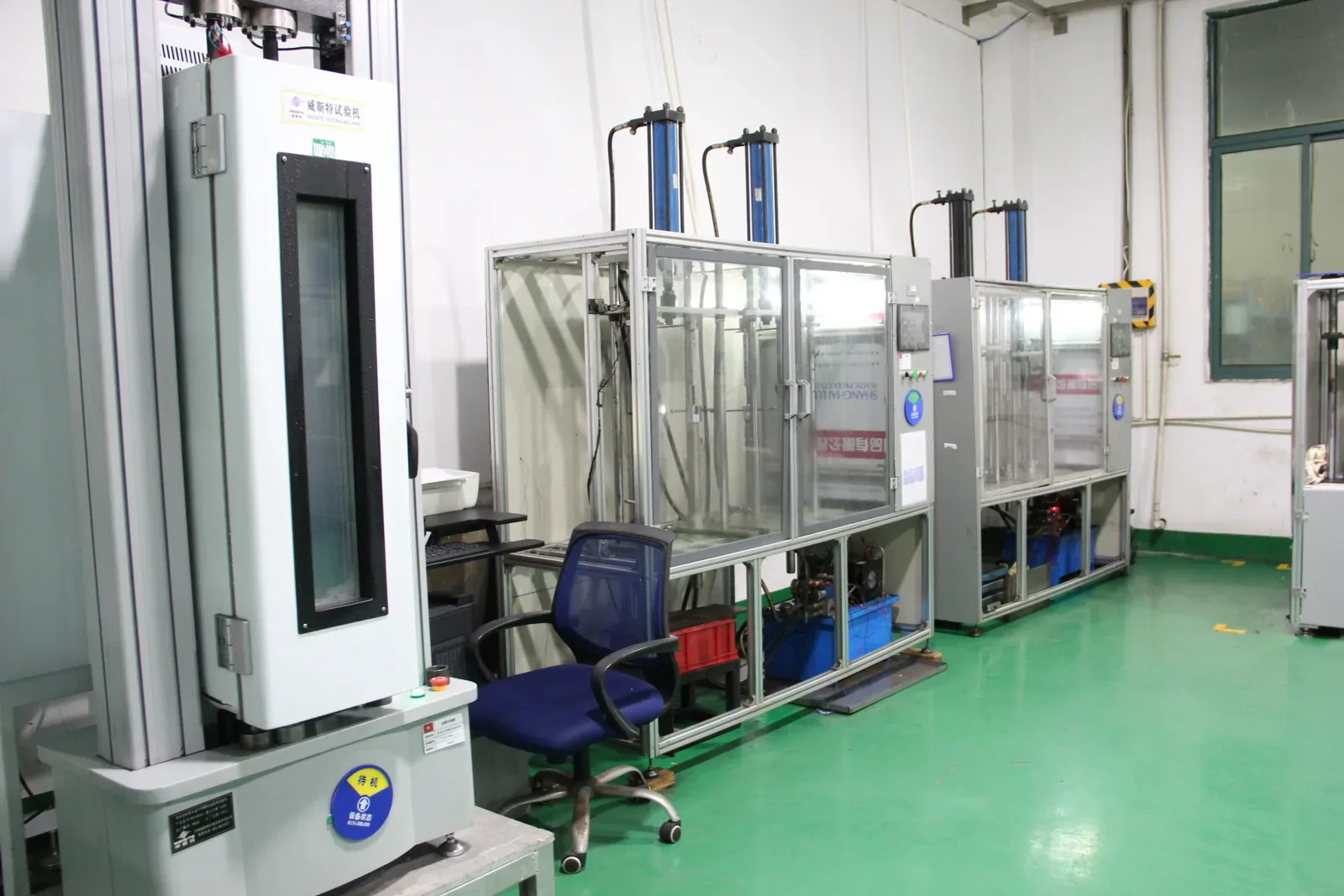
| Force test record | Measured force at set positions on production parts | Long-term force retention | Universal testing machines in the factory laboratory |
| Company qualifications | Legal and technical standing of the manufacturer | Product performance | National High-Tech Enterprise; patents and software copyrights, see certificates |
ISO 9001: The Quality System
ISO 9001 certifies the management system: how drawings, incoming materials, production, inspection, nonconforming parts, and customer complaints are controlled. It is a good first filter for a long-term supplier because it means the factory works to written procedures and is audited.
It does not certify a product. Two ISO 9001 factories can make gas springs of very different quality, so the certificate should be read together with test data for the part you are buying. Ask for the certificate number, the issuing body, the scope (it should cover gas spring design or manufacture), and the expiry date.
Fatigue and Cycle-Life Testing
A fatigue or endurance test cycles a gas spring in and out many times and measures how much force it keeps. It is the closest laboratory answer to "how long will it last". LX gas springs have passed a TÜV fatigue test of 180,000 cycles, and the factory laboratory runs multi-station endurance testers for project samples.
When you read a cycle test, check the stroke used, the cycling speed, the temperature, the orientation, and the pass criterion (for example the allowed force loss). A result is valid for those conditions; side load, heat, contamination, or a different stroke in your product will change real life. See how long gas springs last for the factors involved.
RoHS and Material Declarations
RoHS limits restricted substances such as lead, mercury, cadmium, and certain flame retardants in materials. A RoHS test report from a laboratory such as SGS shows that tested materials are below the limits. LX gas springs are SGS RoHS tested.
RoHS says nothing about strength or life; it is a material compliance document. If your market requires other declarations, ask the supplier early whether and how they can provide them.
Salt Spray and Corrosion Testing
A salt spray test places coated or stainless parts in a chamber of salt mist and records when corrosion appears. It is a comparative test: useful for choosing between coatings, or between painted steel and SS304 or SS316, but the hours in a chamber do not convert directly into years outdoors. The LX laboratory has its own salt spray chamber, and test duration and acceptance criteria are agreed with the buyer.
Ask which standard the test follows (for example ISO 9227 or ASTM B117), how many hours, and how corrosion was judged. For marine and washdown use, see stainless steel gas springs and SS304 vs SS316 gas springs.
Force Testing on Production Parts
Every batch should be checked against the agreed force range. In the LX factory, finished springs are force-tested and inspected for length and smooth movement before packing, and the laboratory measures force on universal testing machines. For OEM projects, agree the measuring point (usually a stated position in the stroke), the tolerance, and how records are kept. See how gas springs are made for where each check happens.
What to Ask a Gas Spring Supplier
- A copy of the ISO 9001 certificate with scope and expiry date
- The fatigue or cycle-life test report, with test conditions and pass criterion
- A RoHS test report for the materials used in your part
- Salt spray results for the coating or stainless grade you plan to use
- Force test records for samples and the inspection plan for batches
- The warranty terms (all LX gas springs carry a 3-year warranty)
- Which tests can be repeated on your own samples before batch approval
Frequently Asked Questions
Does ISO 9001 mean a gas spring is good quality?
It means the factory runs a certified quality management system. Product quality still has to be shown by force, cycle-life, and corrosion test results for your part.
What is a good cycle life for a gas spring?
It depends on the application and test conditions. LX gas springs have passed a TÜV fatigue test of 180,000 cycles; for your product, agree a cycle target and test it on samples with your stroke and mounting.
Is RoHS a performance test?
No. RoHS is a material compliance test for restricted substances. It does not measure force, strength, or life.
Can the factory test my samples?
Yes. The LX laboratory can run force measurement, multi-station endurance cycling, and salt spray tests. Test items and acceptance criteria are agreed per project before batch approval.
Where can I see LX Gas Spring's certificates?
On the certificates page, together with patents and company qualifications. Request a quote to receive test documents for a specific project.