Rugged Gas Springs for Heavy Construction Equipment
How Heavy Equipment Differs From Factory Machinery
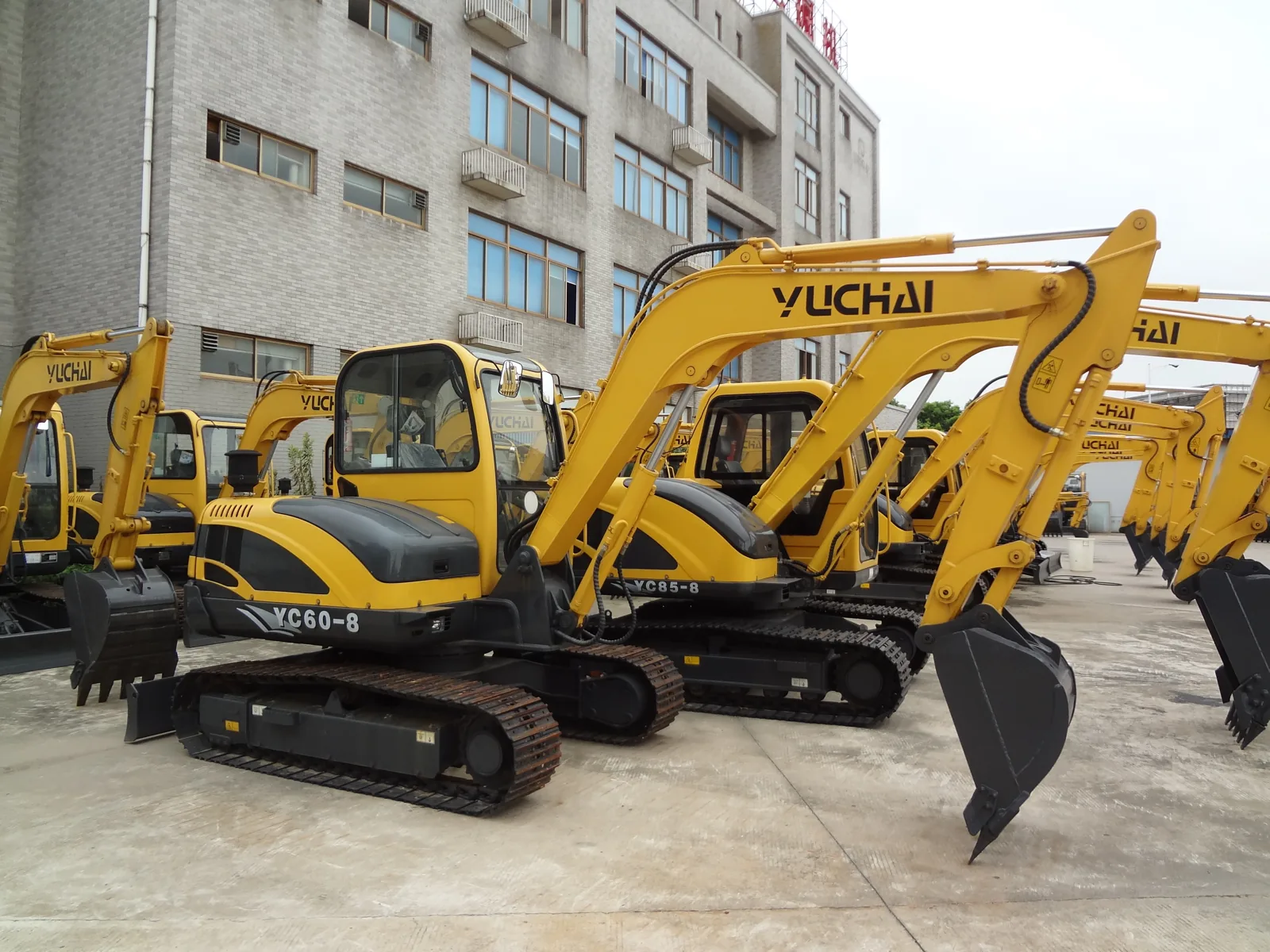
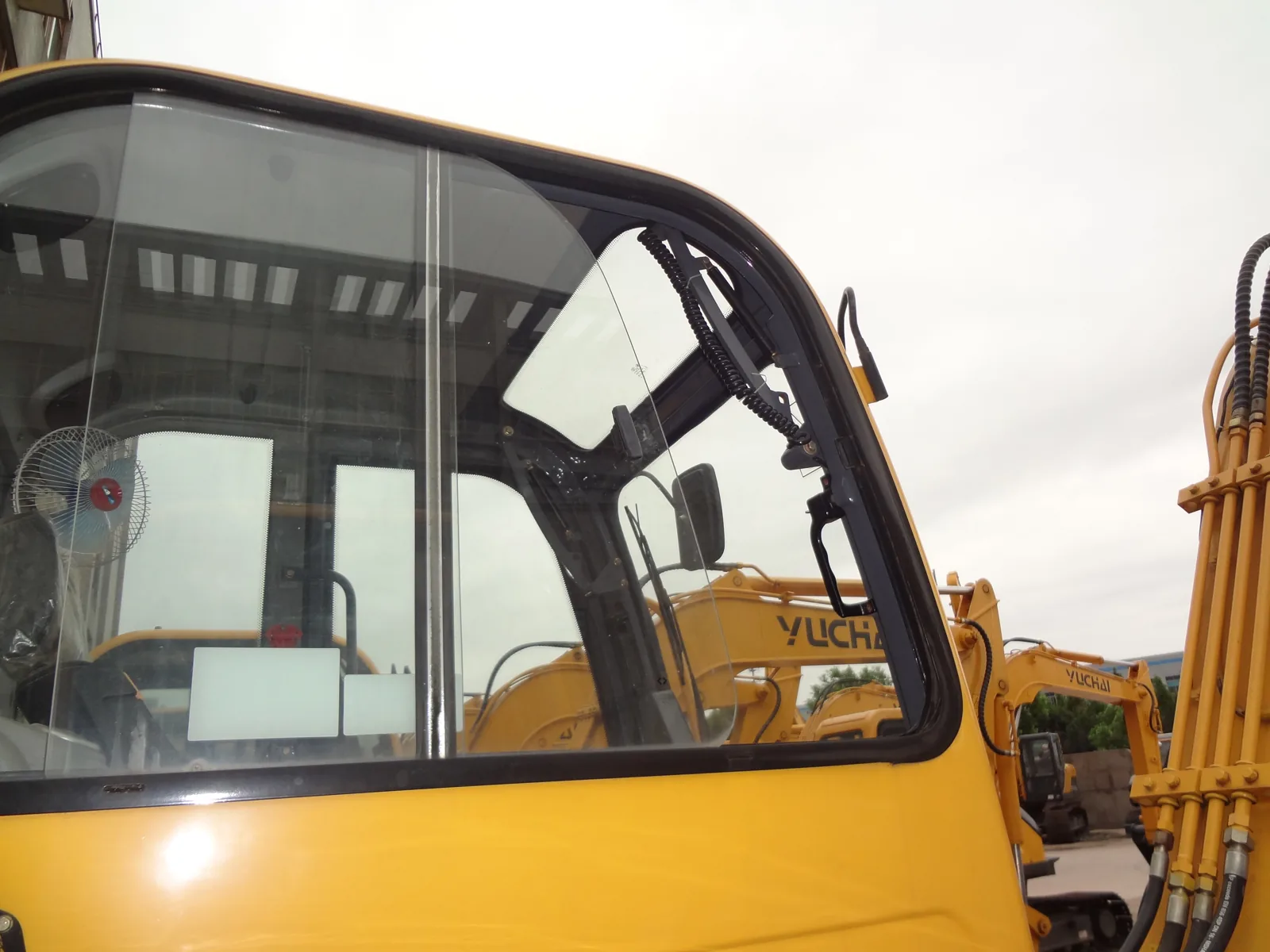
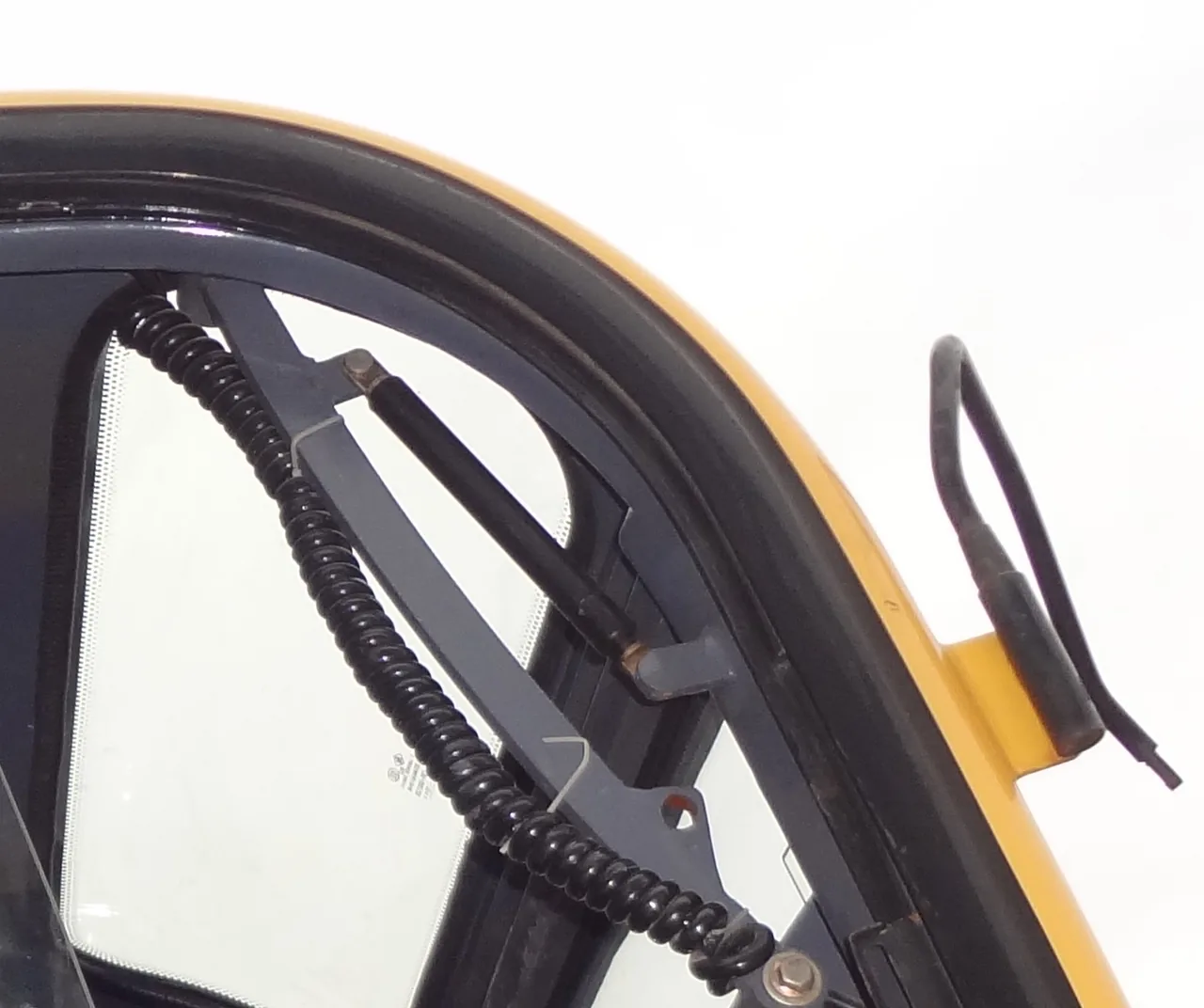
Construction, agricultural, and mining machines work outdoors, so gas springs on engine covers, cab doors, and service hatches see mud, rock dust, rain, washdown, frost, and long periods of vibration. Panels are larger and heavier than machine guards and are opened in the field. The specification therefore calls for a larger rod and tube, metal fittings and brackets that do not loosen under vibration, a rod protected from grit, force sized for the coldest working temperature, and a mechanical stay or safety lock gas spring where a falling cover would be dangerous.
Worked Example: Engine Cover With Two Gas Springs
A 60 kg engine cover has its centre of gravity 400 mm from the hinge (d), and the gas springs act on a 120 mm lever arm (L). With F = (m x g x d) / (n x L), two springs need (60 x 9.81 x 400) / (2 x 120), about 981 N each, or about 1,130 N with a 15% margin for friction and cold weather. One spring would need about 1,960 N on a single bracket and lets the cover twist, so two matched springs are the usual choice. Final values are confirmed with samples on the machine.
Engineering Inputs For Heavy-Duty Selection
Heavy-duty gas strut selection requires panel weight, hinge geometry, mounting space, stroke, force, end fittings, temperature range, contamination exposure, and safety requirements. Some applications may require paired gas springs, lockable support, or additional mechanical safety devices.
Heavy Equipment Gas Spring Applications
Heavy Equipment Gas Spring Selection Guide
Heavy equipment gas springs are selected for large access covers, engine hoods, service panels, and agricultural or construction machinery. These applications often need stronger brackets, paired struts, and careful safety review.
Best-Fit Uses
- Construction machinery engine covers and service hatches.
- Agricultural equipment guards and cab panels.
- Large outdoor equipment covers exposed to dust and vibration.
Recommended Product Types
- Heavy-duty lift gas springs for high-load covers.
- Lockable gas springs or safety stays where operator safety requires extra holding.
- Corrosion-resistant finishes or stainless options for outdoor environments.
What To Send For RFQ
- Panel weight and whether the cover is lifted by one or two struts.
- Hinge location, open angle, and mounting point distance.
- Vibration, dust, mud, temperature, and outdoor exposure.
- Required safety lock or secondary support requirements.
Technical Specifications
| Specification | Reference Options - Confirm by Project |
|---|---|
| Force Range (F1) | Calculated per project from panel weight and hinge geometry |
| Rod / Tube Diameters | Selected from force, stroke, buckling, and packaging requirements |
| Seal Protection | Multi-lip NBR + hardened mud scraper |
| Rod Treatment | High-hardness black nitride for scratch resistance |
| Operating Temperature | Confirmed for the selected seal, oil, and machine environment |
Frequently Asked Questions
How many gas springs does a heavy engine cover need?
Usually two. For a 60 kg cover with its centre of gravity 400 mm from the hinge and a 120 mm lever arm, two springs need about 981 N each (about 1,130 N with a 15% margin); one spring would need about 1,960 N on a single bracket and can twist the cover.
Why do gas struts on my tractor doors keep failing?
Vibration, contamination, misalignment, damaged rods, or unsuitable fittings can contribute to early force loss. Inspect the failed assembly and define the exposure before selecting guides, scrapers, and mounting hardware.
Can these support armored or counter-weighted engine hoods?
Large panels can be reviewed with a heavy-duty series, such as 10/22 mm rod and tube sizes, but nominal gas force is not the same as supported panel weight. Send the panel weight and hinge geometry so the force per strut can be calculated.
What happens if a heavy hood strut loses pressure?
Loss of force can reduce or remove hold-open assistance. The machine risk assessment should determine whether an independent prop, locking tube, or other mechanical restraint is required during service.
Do you supply direct replacements for Caterpillar, John Deere, or Bobcat?
A replacement can be reviewed from the original markings, dimensions, fittings, and application data. Brand compatibility and drop-in fit are confirmed only after dimensional and functional checks.
Should I use plastic ball sockets for tractor windows?
Fitting material should be selected from rated load, articulation, temperature, UV, vibration, and service conditions. Metal eyelets or clevis fittings are often reviewed for demanding loads, but the drawing and rating decide suitability.
How long do heavy equipment gas springs last?
Service life depends on cycles, vibration, temperature, dust, and mounting. LX gas springs have passed a TÜV fatigue test of 180,000 cycles, and all LX gas springs are covered by a 3-year warranty. Cycle and corrosion tests can be agreed on samples for OEM projects.