Lockable and Adjustable Locking Gas Springs
Adjustable Positioning With A Release Control
Lockable gas springs are considered when a panel, seat, table, bed section, or equipment component needs to hold selected intermediate positions. The holding behavior and permitted movement depend on the lock design, load direction, mounting geometry, and complete mechanism.
Rigid And Elastic Locking
Rigid locking is reviewed where firmer position holding is required, while elastic locking permits some movement and may suit comfort-oriented mechanisms. The choice should be tested at the actual working positions and in the relevant load direction.
Release System Integration
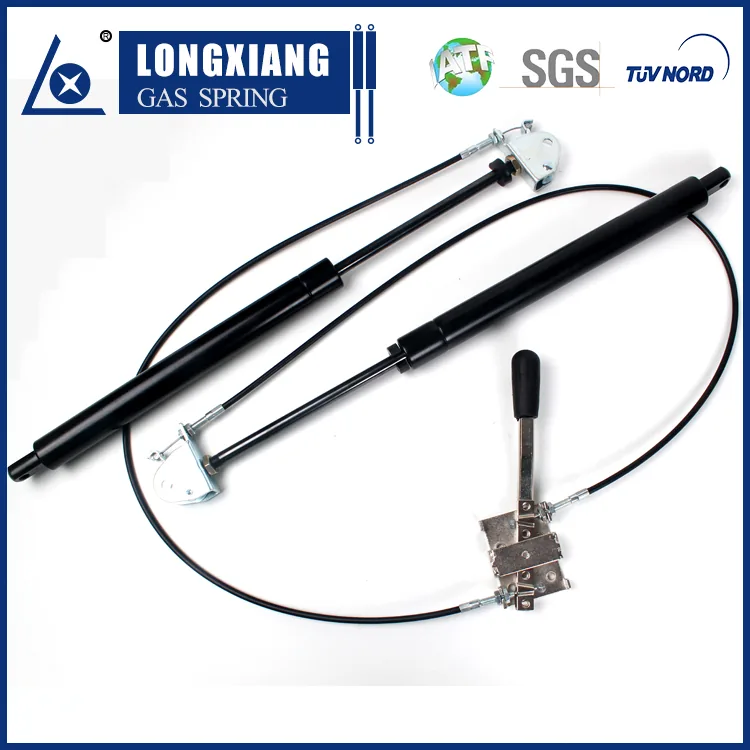
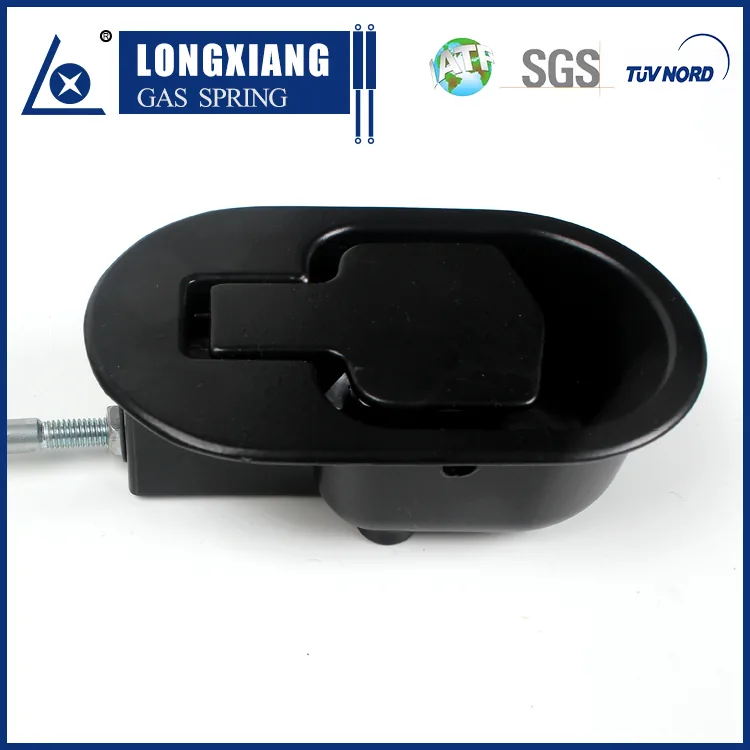
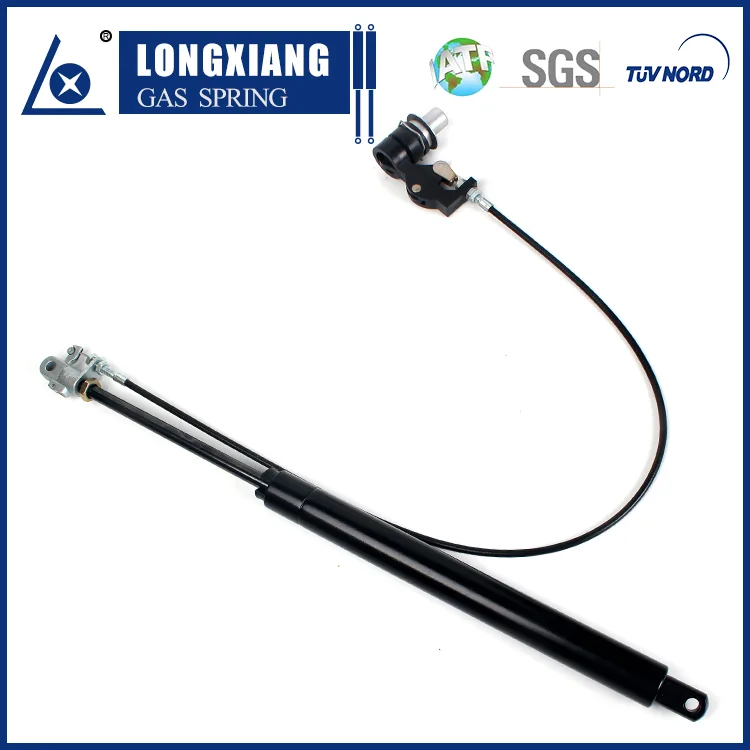
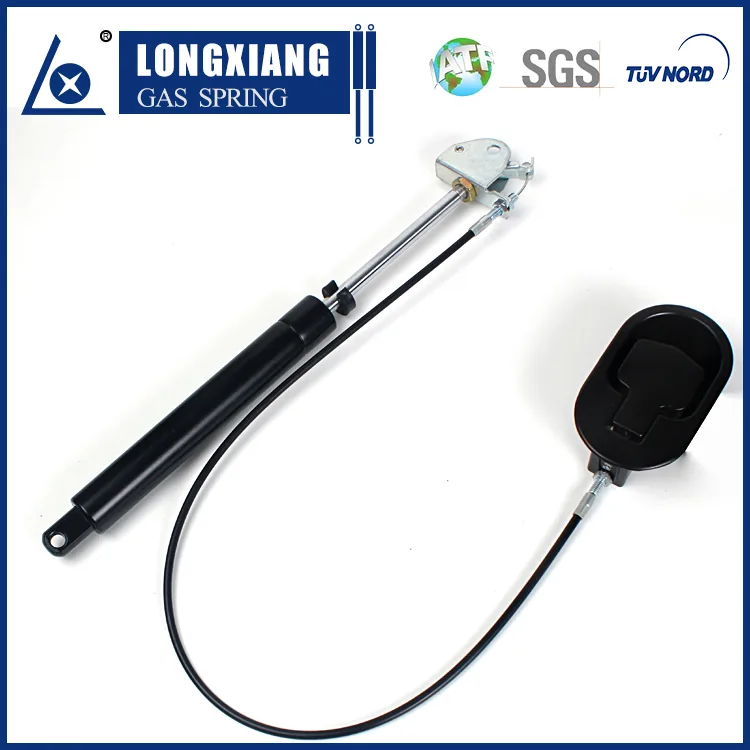
Lever, push-button, cable, and remote-release arrangements affect handle position, cable routing, bend radius, service access, and user operation. These details should be included in the assembly review instead of treating the release head as an isolated accessory.
Sample Validation For Locking Behavior
A sample should be tested in the final assembly for release feel, holding position, bracket load, travel clearance, cable routing, and unintended release risk. Where the gas spring contributes to a safety function, the equipment manufacturer should define and validate the complete safety requirement.
Information To Include In An RFQ
Send required working positions, load direction, force target, stroke, extended and compressed length, release control type, cable route, mounting points, installation space, user operation requirements, sample quantity, and annual volume. Drawings or marked photos help identify clearance and control-placement issues early.
What Is A Lockable Gas Spring?
A lockable (locking) gas spring is a gas spring that can be stopped and locked at any point in its stroke, so a seat, backrest, table top or bed section stays exactly where the user leaves it. It is released by pressing the release pin, through a lever, push-button or Bowden cable, and locks again when the control is let go. Rigid locking holds the position firmly under load; elastic locking gives slightly, which feels more comfortable in seating.
Adjustable Seat And Chair Gas Springs
Adjustable seats and chairs are one of the main uses of lockable gas springs: seat height, backrest recline and footrest angle on office chairs, recliners, vehicle and machine seats, medical and examination chairs. Elastic locking is often chosen for backrests so the seat feels comfortable, and rigid locking where the position must stay firm, such as seat height under a heavy user or medical chairs. The release is usually a lever or a Bowden cable to a handle at the side of the seat. For a seat manufacturer, send the seat load, travel, number of positions, release location and annual volume.
How A Lockable Gas Spring Works
A lockable gas spring has a valve in the piston. Pressing the release pin opens the valve so the rod can move; letting go closes the valve and the spring holds its position anywhere in the stroke. This is why lockable gas springs are used for backrests, table tops, bed sections, and equipment arms that must stop at intermediate positions.
Rigid Locking vs Elastic Locking
In a rigid lockable gas spring, oil fills the locking chamber, so the locked position stays firm under load. In an elastic lockable gas spring, gas remains in the locking chamber, so the locked position gives slightly, which can feel more comfortable in seating. Rigid locking is common for medical beds, height-adjustable tables, and equipment; elastic locking is common for chairs and recliners.
Release Options
LX Gas Spring supplies complete release systems: handle switch sets with Bowden cable, push-button switch sets, lever switch sets, release ends with an integrated switch, single-piece lockable springs released by pressing the pin directly, and dual systems where one handle releases two lockable gas springs at the same time.
Standard KQL Lockable Gas Spring Range
The standard KQL series covers extended lengths from about 200 mm to 900 mm, strokes from 40 mm to 350 mm, and forces from about 60 N to 1,100 N, with 22 mm or 27 mm tubes and 10 mm piston rods. Other lengths, forces, end fittings, and release heads are made to order.
Low-Noise Design And In-House Design Software
Changzhou Longxiang Gas Spring holds Chinese invention patent ZL 2018 1 0128346.8 for a noise-reducing lockable gas spring and its working method (granted January 2024). The company also holds software copyright 2021SR1854030 for its Rigid Lockable Gas Spring Design Analysis System V2.0, used when sizing rigid lockable springs for OEM projects. LX gas springs have passed a TÜV fatigue test of 180,000 cycles, and all LX gas springs are covered by a 3-year warranty.
Lockable Gas Springs and Release Systems
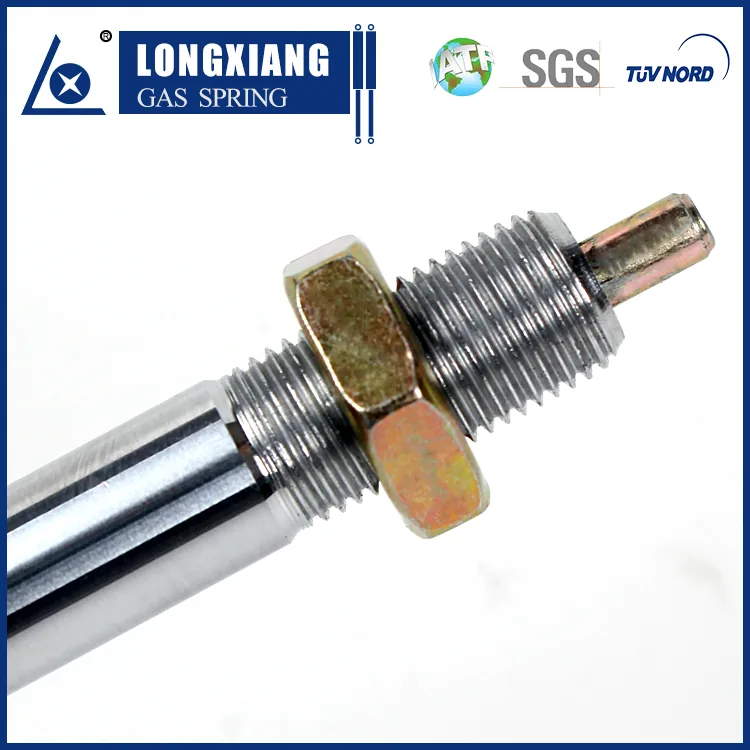
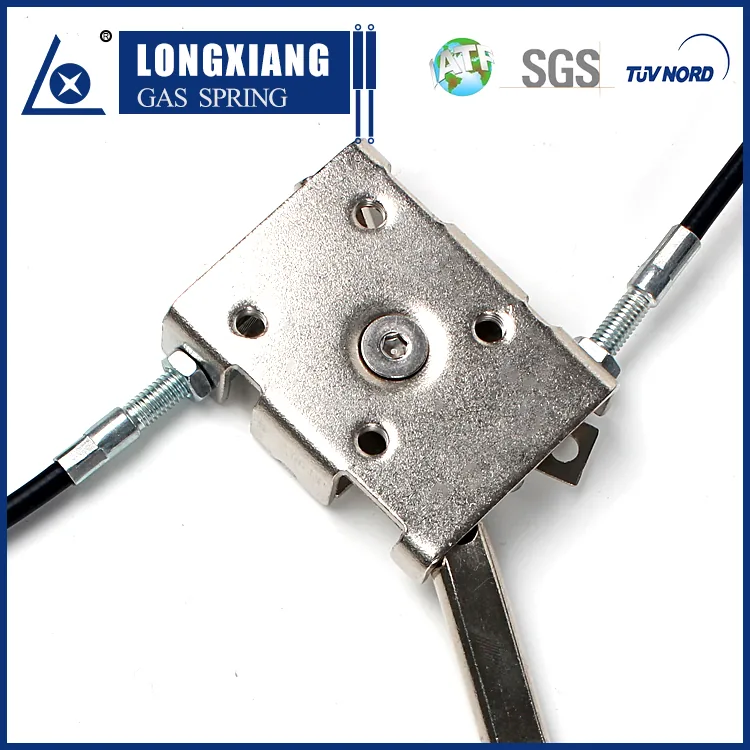
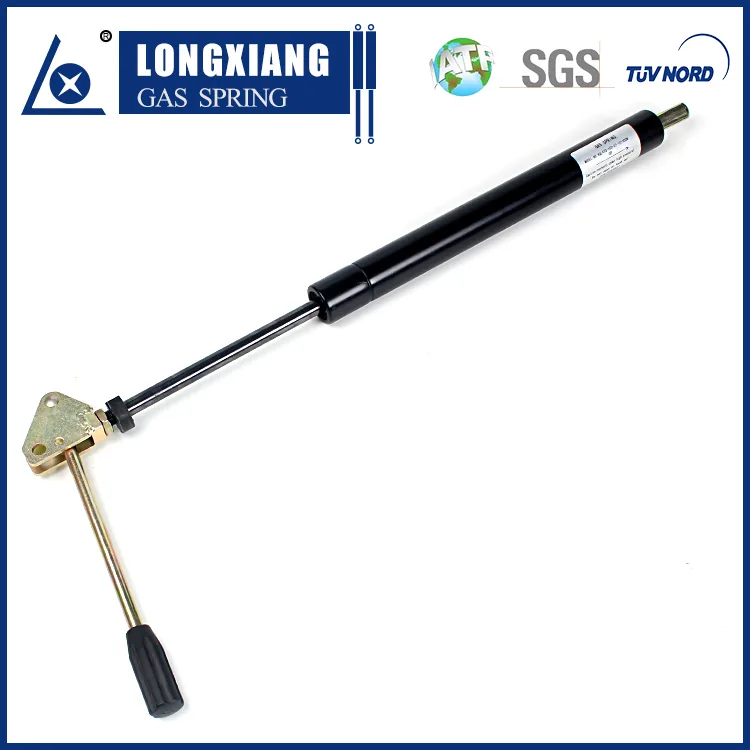
Lockable Gas Spring Selection By Application
| Application | Locking type | Usual release | Starting point |
|---|---|---|---|
| Seat and chair adjustment (height, backrest) | Elastic for comfort; rigid for firm hold | Lever or Bowden cable to a side handle | Single lever or cable release lockable gas spring |
| Height-adjustable tables and beds | Rigid | Cable to a handle or push-button under the top | Cable release or push-button release lockable gas spring |
| Medical beds, chairs and equipment | Rigid | Cable, lever or push-button | Lockable gas spring validated in the device |
| Truck toolbox lids and tonneau covers | Rigid | One handle releasing two springs | Dual gas spring tonneau cover control system |
| Industrial panels and equipment arms | Rigid | Push-button or remote release | Adjustable-position or remote release lockable gas spring |
Frequently Asked Questions
What is a lockable gas spring?
A lockable gas spring is a gas spring with an internal valve that can stop and hold the rod at any position in its stroke. It is released by pressing a pin, usually through a lever, button, or Bowden cable, and locks again when the control is let go.
Do you make lockable gas springs for adjustable seats and chairs?
Yes. LX Gas Spring makes lockable gas springs for seat height, backrest recline and footrest adjustment, with elastic or rigid locking and lever or Bowden cable release. Send the seat load, travel, number of positions, release location and annual volume for a recommendation and samples.
What is an adjustable locking gas spring?
Another name for a lockable gas spring: a gas spring that can be locked at any point in its stroke and released again with a lever, push-button or cable, so the position can be adjusted by the user.
When should an OEM project use a lockable gas spring?
Use a lockable gas spring when the mechanism must hold intermediate positions, such as medical beds, adjustable tables, seating, lift mechanisms, or controlled industrial panels.
What is the difference between rigid and elastic locking?
Rigid locking uses oil in the locking chamber and holds firmly under load. Elastic locking keeps gas in the chamber and gives slightly, which can feel more comfortable in seating. The choice should be tested in the real assembly.
Which release controls can be specified?
Options include handle switch sets with Bowden cable, push-button sets, lever sets, release ends with an integrated switch, single-piece springs released at the pin, and one-handle systems that release two springs together.
What sizes are available for standard lockable gas springs?
The standard KQL series runs from about 200 mm to 900 mm extended length, 40 mm to 350 mm stroke, and about 60 N to 1,100 N force, with 22 mm or 27 mm tubes and 10 mm rods. Custom sizes are available.
Do lockable gas springs make noise when released?
Release noise depends on valve design, speed, and mounting. Changzhou Longxiang Gas Spring holds Chinese invention patent ZL 2018 1 0128346.8 for a noise-reducing lockable gas spring and its working method (granted January 2024).
Can lockable gas springs be used in medical equipment?
Lockable gas springs can be reviewed for medical equipment, but the safety role, release feel, holding position, bracket load, and repeat operation should be validated with the actual bed, chair, table, or device before approval.
What should be checked before approving a lockable gas spring sample?
Check release operation, cable routing, user access, holding strength, travel clearance, bracket load, service access, and whether the mechanism locks correctly at the required working positions.