LX Gas Spring Resource
Damper vs Gas Spring: What Is the Difference and Which Do You Need?
A gas spring pushes and lifts; a damper only slows motion. Compare how they work, where each is used, when to combine them, and how to specify both.
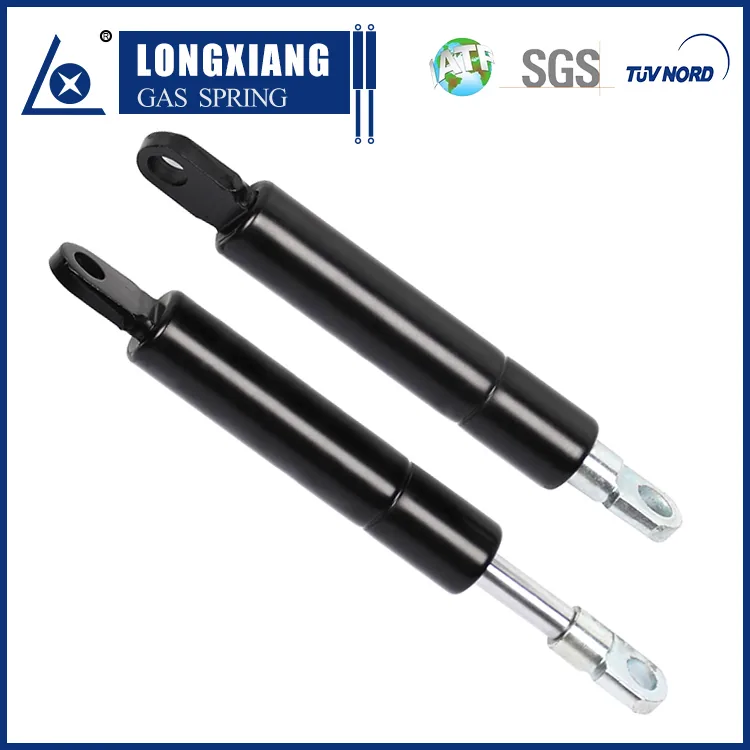
Dampers and gas springs look almost the same: a tube, a rod and two end fittings. They do opposite jobs. Choosing the wrong one gives a lid that will not stay open, or one that slams shut.
Short answer: a gas spring pushes. Its nitrogen charge creates an extension force that lifts a lid and holds it open. A damper brakes. It has little or no force of its own and only slows movement, so a door or flap closes or opens gently instead of slamming. Use a gas spring to lift and hold, a damper to control speed, and both together when a heavy part must be lifted and also close gently.
How a Gas Spring Works
A gas spring is a sealed tube filled with nitrogen and a little oil. The gas pressure acts on the piston rod and pushes it out with a nearly constant force, from about 10 N to 2,500 N in the LX range. That force counterbalances the weight of a lid, hatch or seat, so it feels light and stays open on its own. Oil at the end of the stroke slows the rod just before it is fully extended. Read how gas springs work.
How a Damper Works
A hydraulic damper is filled with oil. When the rod moves, oil has to pass through a small orifice in the piston, and that resistance slows the movement. The faster you push, the more it resists. A damper can be made to brake in compression, in extension, or in both directions, and the valving sets how quickly the part moves.
Side-by-Side Comparison
| Gas spring | Damper | |
|---|---|---|
| Main job | Lifts, counterbalances and holds open | Slows movement, prevents slamming |
| Force of its own | Yes, set by the nitrogen charge | Little or none |
| Holds a lid open | Yes (lockable versions hold any position) | No |
| Inside | Nitrogen and oil | Mainly oil |
| Direction | Pushes outward | Brakes in compression, extension or both |
| Typical uses | Toolbox lids, hatches, hoods, tailgates, seats, beds | Drop-down doors, soft-close flaps, waste bin lids, RV compartment doors, machine guards |
| LX standard range | About 10-2,500 N, 20-1,000 mm stroke | ZQL: about 50-445 N damping force, 15-370 mm stroke |
When to Use Which
- Gas spring only: the part must be lifted and stay open, and a firm opening is fine. Most toolbox lids, equipment covers and vehicle hatches.
- Damper only: the part falls or swings by itself and should simply move slowly, such as a drop-down cabinet door, a desk flap or a lid that closes under its own weight.
- Gas spring and damper together: a heavy lid must be lifted with help and should also close gently. The gas spring carries the weight; the damper controls the closing speed.
- Lockable gas spring: the part must stop at any position, such as a recliner backrest or a height-adjustable table. See lockable gas spring release systems explained.
Where Damping Helps Industrial Equipment
Machine guards and service covers may be heavy or opened often. Without controlled motion, panels can slam, bounce, or stress hinges; a damper protects the hardware and reduces operator risk. In storage compartments and waste bins, damping reduces impact and improves perceived quality. Where the equipment sees water, cleaning, outdoor weather, or corrosive substances, choose the surface treatment or a stainless steel option to suit.
Specifying a Damper
Send the moving weight and its centre of gravity, the stroke, extended and compressed length, the direction that needs braking (closing, opening or both), the closing or opening time you want, the end fittings and the working environment. The standard ZQL damper series covers about 112-825 mm extended length, 15-370 mm stroke and about 50-445 N damping force, with 15, 18 or 22 mm tubes and 6, 8 or 10 mm rods; other sizes are made to order. For marine, washdown or outdoor use, SS316 stainless steel saltwater-resistant dampers are available.
Specifying a Gas Spring
Start with the force from the gas spring force calculator, then the stroke, lengths and end fittings. The specifications guide explains F1, F2 and progression.
Compare hydraulic dampers, including the ball joint damper and the SS316 stainless steel saltwater-resistant damper, and lift gas springs, or send your mechanism for a recommendation.
Frequently Asked Questions
What is the difference between a damper and a gas spring?
A gas spring pushes and lifts with a nitrogen charge and can hold a lid open. A damper only slows movement; it has little or no force of its own.
Can a damper hold a lid open?
No. Use a gas spring to hold a lid open, or a lockable gas spring to hold it at any position.
Can I use a gas spring and a damper together?
Yes. On heavy lids, a gas spring carries the weight and a damper controls the closing speed, so the lid is light to open and closes gently.
Does a gas spring have damping?
Yes, a little. Oil inside slows the rod at the end of the extension stroke, but it does not control the closing speed the way a damper does.
Which direction should a damper brake?
It depends on the motion you want to control. A drop-down door needs braking as it opens downward; a lid that falls shut needs braking as it closes. State the direction when ordering.